The art of cooking
AI CHEF Blog

The Art of Cutting: Mastering Knife Skills for Home Chefs
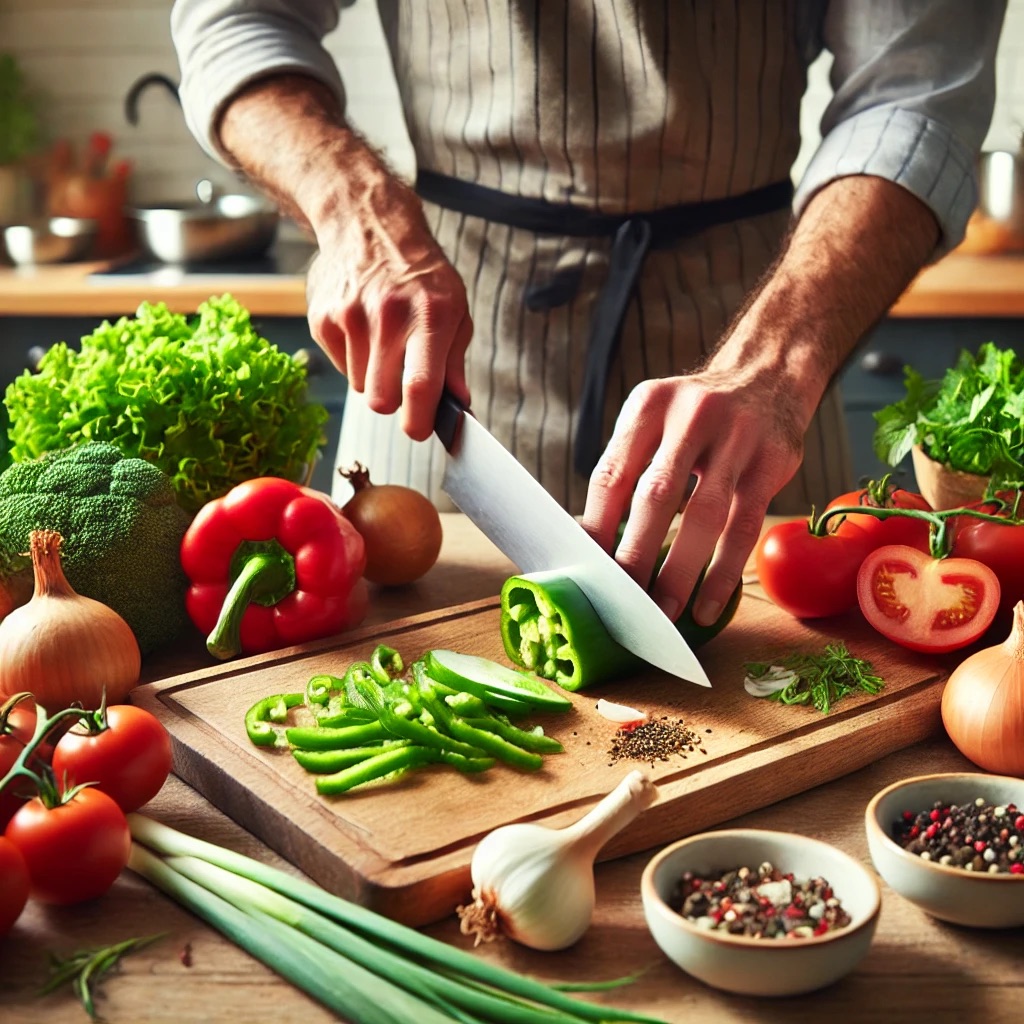
In the world of culinary arts, knife skills are one of the most fundamental yet often overlooked aspects of cooking. Whether you’re a beginner in the kitchen or a seasoned home chef, mastering the art of cutting can significantly enhance your cooking experience, improve your dish presentation, and even elevate your safety while preparing food. In this article, we will explore the essential knife skills every home chef should master, the types of knives to use, and some tips and techniques to help you become a proficient cutter.
Understanding the Importance of Knife Skills
Knife skills are more than just a way to chop vegetables; they are an essential component of cooking that affects the texture, flavor, and presentation of your dishes. Proper knife skills can also speed up your prep time, allowing you to spend more time enjoying your meals rather than preparing them.
Furthermore, knowing how to handle a knife safely can prevent accidents and injuries in the kitchen. A well-cut ingredient cooks evenly, resulting in better flavor and texture. Therefore, investing time in mastering your knife skills will pay off in the long run.
Choosing the Right Knives
Before diving into techniques, it’s crucial to have the right tools. Here are the essential knives every home chef should consider:
- Chef's Knife: The workhorse of the kitchen, the chef's knife is versatile and can be used for slicing, dicing, and chopping a wide variety of ingredients.
- Paring Knife: Ideal for intricate work, a paring knife is perfect for peeling fruits and vegetables or performing delicate tasks like deveining shrimp.
- Serrated Knife: This knife is best for cutting through items with a hard exterior and soft interior, such as bread and tomatoes.
- Boning Knife: Useful for removing bones from meat, poultry, and fish, this knife has a thin, flexible blade that allows for precision.
- Fillet Knife: Specifically designed for filleting fish, this knife has a long, thin blade that helps you easily separate the flesh from the bones.
Invest in high-quality knives, as they will last longer and perform better. Remember to keep your knives sharp; a dull knife is not only inefficient but also dangerous.
Knife Safety Tips
Safety should always come first in the kitchen. Here are some essential safety tips to keep in mind while using knives:
- Use a Cutting Board: Always cut on a stable cutting board to prevent slipping. A wooden or plastic board is ideal for keeping your knife's edge sharp.
- Keep Your Knife Sharp: A sharp knife is safer than a dull one because it requires less force to cut, reducing the likelihood of slipping and cutting yourself.
- Cut Away from Your Body: Always direct the blade away from your body and keep your fingers and other body parts clear of the blade's path.
- Practice Proper Grip: Hold the knife securely with your dominant hand while using your other hand to guide the food. The claw grip (folding fingers under) is an effective way to keep your fingers safe.
Basic Cutting Techniques
Now that you understand the importance of knife skills and safety, let’s dive into some fundamental cutting techniques:
1. Chopping
Chopping is a basic technique used for cutting food into small, uniform pieces. To chop effectively:
- Hold the knife with your dominant hand and place your non-dominant hand on top of the knife for control.
- Use a rocking motion to chop through the ingredient, keeping the tip of the knife on the cutting board.
2. Dicing
Dicing involves cutting food into small cubes. Here’s how to do it:
- First, chop the ingredient into strips (julienne).
- Then, turn the strips and slice across them to create uniform cubes.
3. Slicing
Slicing is used for cutting food into thin pieces. To slice:
- Hold the knife at a 45-degree angle to the food.
- Use a smooth motion, applying gentle pressure as you slice through.
4. Mincing
Mincing is the finest form of chopping, often used for garlic, herbs, or onions. To mince:
- Chop the ingredient into smaller pieces, then use a rocking motion to continue chopping until finely minced.
5. Julienne
Julienne involves cutting food into long, thin strips. To achieve a julienne cut:
- Start by slicing the ingredient into planks, then cut those planks into strips.
Advanced Techniques
Once you've mastered the basics, you can try some advanced techniques to really impress your guests:
1. Brunoise
This technique involves dicing food into very small cubes (about 1/8 inch). To perform a brunoise cut:
- First, julienne the ingredient, then turn the strips and cut them into small cubes.
2. Chiffonade
This technique is often used for leafy greens and herbs. To chiffonade:
- Stack the leaves, roll them tightly, and slice across the roll to create thin strips.
3. Paysanne
Paysanne refers to cutting food into thin, flat shapes, often in triangles or circles. To cut paysanne:
- Slice the ingredient into thin planks, then cut those into the desired shapes.
Practice Makes Perfect
Like any skill, the more you practice your knife techniques, the better you will become. Start with simple tasks, such as chopping vegetables for a stir-fry or dicing onions for a soup. As you gain confidence, experiment with more advanced techniques and different ingredients.
Consider investing in a quality knife skills class or watching online tutorials to gain further insights and tips from professional chefs. Practice on various ingredients to develop a feel for how different foods respond to your cutting techniques.
Conclusion
Mastering knife skills is an art that every home chef should strive to perfect. Not only will it improve your cooking efficiency, but it will also enhance the overall quality of your meals. Remember that safety is paramount, so always use the right techniques and tools. With practice and patience, you will soon cut like a pro, making your time in the kitchen more enjoyable and rewarding.
So grab your knives, start practicing these techniques, and take your culinary skills to the next level!
Related articles
 Mastering the Basics
Chop, Slice, and Dice Like a Pro
Mastering the Basics
Chop, Slice, and Dice Like a Pro
 Knife Skills 101
The Art of Chopping, Slicing, and Dicing
Knife Skills 101
The Art of Chopping, Slicing, and Dicing
 From Amateur to Pro
Essential Knife Skills for Every Cook
From Amateur to Pro
Essential Knife Skills for Every Cook
 The Ultimate Guide to Knife Skills
Chop, Slice, and Dice with Confidence
The Ultimate Guide to Knife Skills
Chop, Slice, and Dice with Confidence
 Cut It Right
A Beginner's Guide to Knife Techniques
Cut It Right
A Beginner's Guide to Knife Techniques
 Chop, Slice, Dice
The Three Pillars of Knife Skills
Chop, Slice, Dice
The Three Pillars of Knife Skills
 Essential Knife Skills
How to Chop, Slice, and Dice Like a Chef
Essential Knife Skills
How to Chop, Slice, and Dice Like a Chef
 Knife Skills for Beginners
Start Chopping, Slicing, and Dicing Today
Knife Skills for Beginners
Start Chopping, Slicing, and Dicing Today
 The Secret to Perfect Knife Skills
Tips for Chopping, Slicing, and Dicing
The Secret to Perfect Knife Skills
Tips for Chopping, Slicing, and Dicing
 Knife Skills Demystified
A Step-by-Step Guide to Chopping, Slicing, and Dicing
Knife Skills Demystified
A Step-by-Step Guide to Chopping, Slicing, and Dicing
 Chop, Slice, Dice
How to Use Your Knife Like a Pro
Chop, Slice, Dice
How to Use Your Knife Like a Pro
 Elevate Your Cooking
Mastering Knife Skills for Chopping, Slicing, and Dicing
Elevate Your Cooking
Mastering Knife Skills for Chopping, Slicing, and Dicing
 Knife Skills Explained
The Basics of Chopping, Slicing, and Dicing
Knife Skills Explained
The Basics of Chopping, Slicing, and Dicing
 From Kitchen Novice to Knife Skills Ninja
Your Guide to Chopping and Slicing
From Kitchen Novice to Knife Skills Ninja
Your Guide to Chopping and Slicing
 The Chef's Guide to Knife Skills
Perfecting Your Chop, Slice, and Dice
The Chef's Guide to Knife Skills
Perfecting Your Chop, Slice, and Dice
 Cutting Edge Techniques
Mastering Knife Skills in Your Kitchen
Cutting Edge Techniques
Mastering Knife Skills in Your Kitchen
 Chop, Slice, Dice
Essential Knife Skills Every Home Cook Should Know
Chop, Slice, Dice
Essential Knife Skills Every Home Cook Should Know
 Knife Skills Essentials
The Basics of Chopping, Slicing, and Dicing
Knife Skills Essentials
The Basics of Chopping, Slicing, and Dicing
 Knife Skills for Home Cooks
How to Chop, Slice, and Dice with Ease
Knife Skills for Home Cooks
How to Chop, Slice, and Dice with Ease
 Unlocking Your Culinary Potential
The Basics of Knife Skills
Unlocking Your Culinary Potential
The Basics of Knife Skills
 Chop, Slice, and Dice Like a Pro
Essential Knife Skills for All Levels
Chop, Slice, and Dice Like a Pro
Essential Knife Skills for All Levels
 Knife Skills Bootcamp
Your Comprehensive Guide to Chopping and Slicing
Knife Skills Bootcamp
Your Comprehensive Guide to Chopping and Slicing
 Precision Cutting
Mastering the Knife Skills of Chop, Slice, and Dice
Precision Cutting
Mastering the Knife Skills of Chop, Slice, and Dice
 Get the Perfect Cut
A Complete Guide to Knife Skills
Get the Perfect Cut
A Complete Guide to Knife Skills
 Knife Skills for Success
How to Chop, Slice, and Dice with Precision
Knife Skills for Success
How to Chop, Slice, and Dice with Precision
 The Basics of Knife Skills
Elevate Your Cooking Game with Chop, Slice, and Dice
The Basics of Knife Skills
Elevate Your Cooking Game with Chop, Slice, and Dice
 Chop, Slice, Dice
A Culinary Journey into Knife Skills
Chop, Slice, Dice
A Culinary Journey into Knife Skills
 The Kitchen Essentials
Understanding Knife Skills for Better Cooking
The Kitchen Essentials
Understanding Knife Skills for Better Cooking
 Knife Skills Made Easy
Chop, Slice, and Dice Like a Culinary Artist
Knife Skills Made Easy
Chop, Slice, and Dice Like a Culinary Artist
 Cutting to the Chase
Mastering Knife Skills for Home Cooking
Cutting to the Chase
Mastering Knife Skills for Home Cooking
 Knife Skills for the Everyday Cook
Tips for Chopping, Slicing, and Dicing
Knife Skills for the Everyday Cook
Tips for Chopping, Slicing, and Dicing
 The Fundamentals of Knife Skills
Chop, Slice, and Dice with Confidence
The Fundamentals of Knife Skills
Chop, Slice, and Dice with Confidence
 Chop, Slice, and Dice
Unlocking the Basics of Knife Skills
Chop, Slice, and Dice
Unlocking the Basics of Knife Skills
 Knife Skills for Culinary Excellence
The Art of Chopping, Slicing, and Dicing
Knife Skills for Culinary Excellence
The Art of Chopping, Slicing, and Dicing
Knife Skills 101
A Beginner's Guide to Chopping, Slicing, and Dicing
Slice, Dice, Chop
The Essential Knife Skills for Every Kitchen
Essential Knife Skills
Mastering the Art of Chopping, Slicing, and Dicing
Knife Skills for Culinary Enthusiasts
Your Guide to Chop, Slice, and Dice
The Art of Cutting
Mastering Knife Skills for Home Chefs
Knife Skills Unleashed
Techniques for Perfect Chopping, Slicing, and Dicing
Master Your Knife Skills
A Comprehensive Guide to Chopping, Slicing, and Dicing
Chop, Slice, and Dice
The Essential Skills for Every Aspiring Chef
Knife Skills Unlocked
Techniques to Chop, Slice, and Dice Like a Pro
The Kitchen Knife Masterclass
Chopping, Slicing, and Dicing Techniques
Knife Skills for the Modern Cook
Perfecting Your Chop, Slice, and Dice
Chop It Like It's Hot
Essential Knife Skills for Every Cook
Knife Skills Bootcamp
Transform Your Cooking with Chopping, Slicing, and Dicing
Knife Skills Made Simple
How to Chop, Slice, and Dice Effectively
The Knife Skills Handbook
Mastering Chop, Slice, and Dice Techniques
Chop, Slice, Dice
A Comprehensive Guide to Essential Knife Skills
Categories